
From Anneliese, the director-
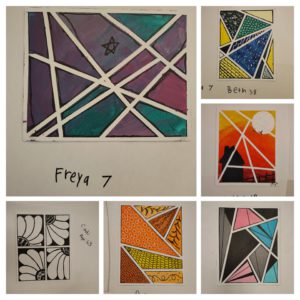
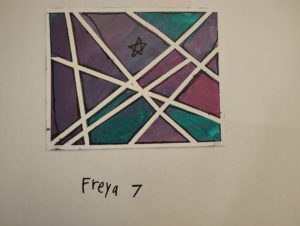
Freya, Age 7
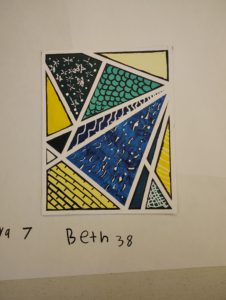
Beth, Age 38 (Signature by Freya)
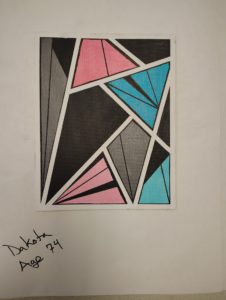
Dakota, Age 74
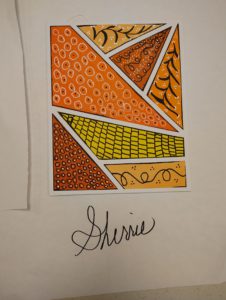
Sherrie, Ageless
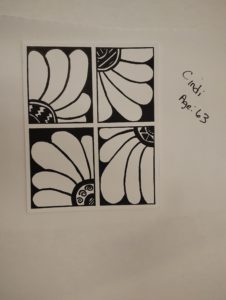
Cindi, Age 63
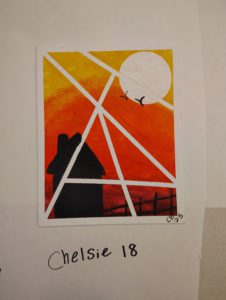
Chelsie, Age 18
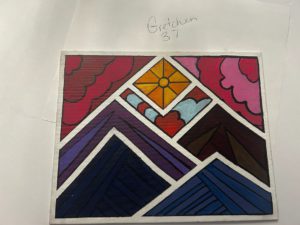
Gretchen, Age 37
Today was the very first Art4All class.
A small turnout with a stellar success! For this project, we created abstract paintings with masking tape, acrylic paint, and paint pens!
Thank you to everyone who joined! It meant a great deal to me that I live in a community that wants the opportunity to create together. I consider myself and artist before I’m anything else. It’s how I relate to the world, how I communicate, the avenue through which I relate to all things. Through librarianship, I’m now able to share that love with my community. It’s a great gust of wind beneath my sails, to know that I am able to lean into my strengths.
Below are some written instructions. They are painfully specific because I come from an education background. Feel free to print and use in your library, classroom, or living room! (But remember, the benefit of making art at Art4All is that your supplies are completely free!) I hope in the future to include photos to make it easier to understand, but might end up doing those in separate posts.
You will need the following supplies and materials:
- Canvas boards or stretched canvases
- Masking tape (I prefer to use the finer sizes like 1/4″ or 1/8″ so I can get finer lines)
- Acrylic paint
- Acrylic paint pens (black, white for touching up borders)
- Rinse cups for water
- Paintbrushes (flat, medium and larger brushes work best)
- Palettes or paper plates for paint
- Paper plates or rags to dab excess water from the paintbrushes
There are only 5 simple steps!
- Tape
- Tape a border along the edges of the canvas
- Use the tape to create sections on the canvas; I like to start with two large, but not equal sections, then I choose one to break one up even further. This helps to create a bit of variety. Think of looking at your art piece like you’re holding a weight: it’s much more difficult to hold five pounds straight in front of you for 30 seconds than it is to do the same in 30 separate reps, even if it takes 60 seconds. Viewing takes attention, and you need to give attention a small break between looking at the details
- Paint
- Each section should be painted differently than the sections directly next to it
- The colors are totally up to you. However! My suggestion is to choose different shades of the same color, or a few colors that are similar. Think of the word “cohesive”; not totally the same, but not so different that they don’t make sense together.
- Between changing colors, be sure to rinse the paint out well from the bristles of your paintbrush. If you’ve never worked with acrylic paint before, it dries rather quickly and if it dries to your brush, it’s very difficult to remove it and restore the brushes again.
- Be careful painting the edges of the sections as using too much paint can potentially get under the masking tape
- Draw (Don’t Peel Yet!)
- Using the black paint pens, carefully draw borders around the edges of each section
- Draw patterns in each section. Don’t overthink it! You can draw circles of different sizes that look like targets, a wavy checkerboard so you don’t have to worry about straight lines, or trace around some random small objects you have laying around. The important thing to remember is that there is no right answer.
- Peel
- Savor the peelies
- Sign
- Signatures are traditionally done in the lower right corner, the year the painting is completed can also be included but varies depending on the artist.
And don’t forget, if any of these rules can be broken for the sake of making something you think would look cool, by all means, break the rules.
Library programmers: If you have several art class programs throughout the year, consider inviting patrons back for a collective art show annually. It will give you an opportunity to show non-art-class-goers what they’re missing, or simply give them something to appreciate about their neighbors.
Recent Comments